Prism Breakers
Prism brick-breaker arcade
Prism Breakers
Control every return angle and shatter the crystal formation before the last orb falls.
0 / 30Charging the prism arena…Prism BreakersControl every return angle and shatter the crystal formation before the last orb falls.
0 / 30Drag the rail. The centred glowing card is selected.
Return the light orb and shatter every breakable crystal.
Drag anywhere across the arena to align the paddle with your finger. Contact near the paddle edge creates a sharper return angle.
Your completed progress is safe. This attempt will restart.
The crystal formation has shattered.
Move the paddle beneath each returning light orb, control the rebound with the contact point, and shatter every breakable crystal before all three orbs are lost.
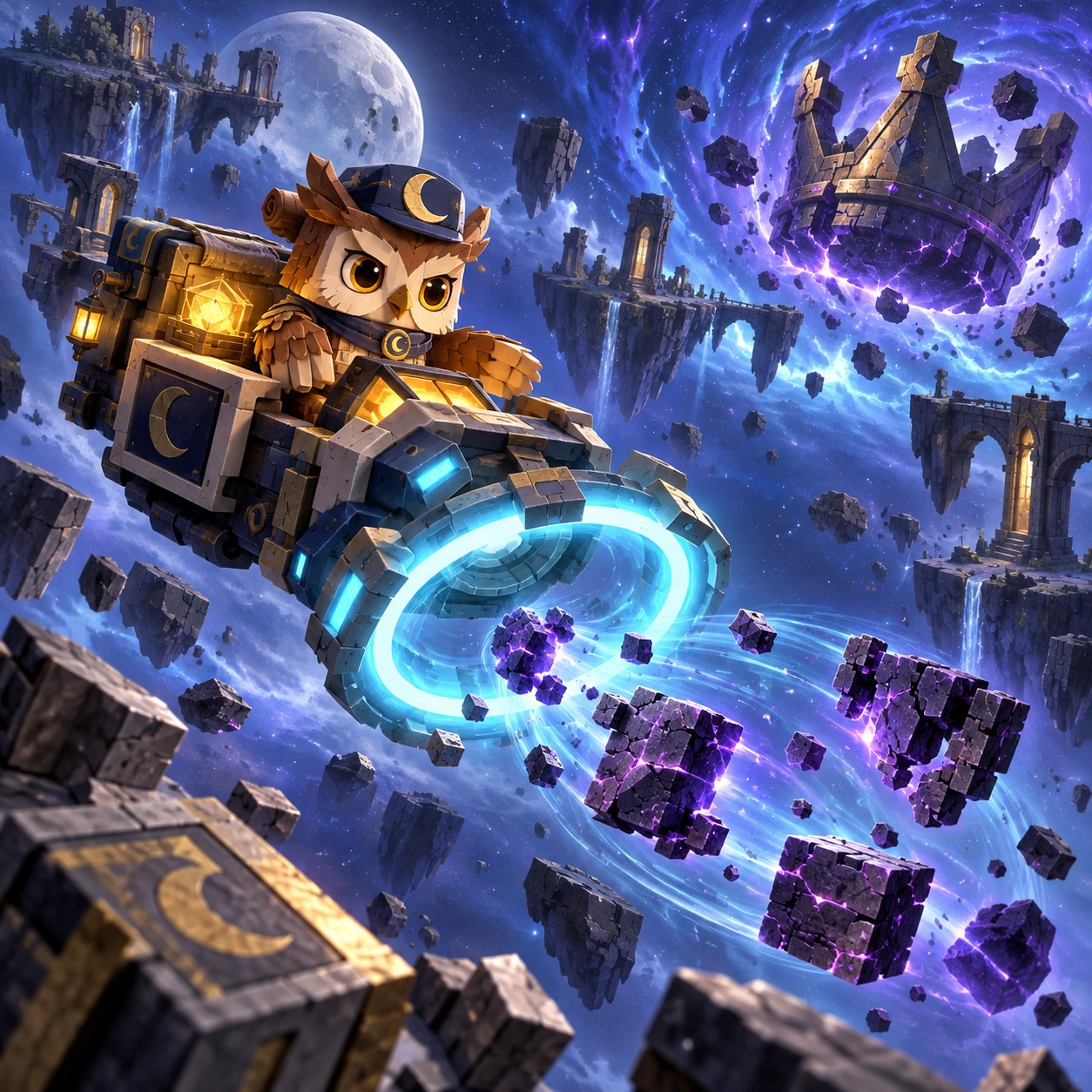
A fox keeper restores thirty prism formations across six arenas. Each formation is authored around a visible rebound lesson rather than an endless random brick field.
The chapter names preview the changing rule: Sunlit Quarry, Split Spectrum, Moving Gallery, Mirror Vault, Gravity Forge, and Eclipse Prism.
Drag anywhere across the arena to align the paddle with a finger or pointer, or use Left and Right or A and D. The paddle remains horizontally constrained.
A hit near the paddle center produces a controlled return. Contact nearer an edge produces a sharper angle that can enter protected side lanes.
The stage clears after every breakable crystal is gone. Missing an orb spends one of three available orbs; losing all three ends the attempt.
Later chapters split orbs through combos, move crystal bands, add permanent mirrors, advance crystal walls, alter the return with gravity, and place fatal void mines. Permanent mirrors are routing tools, not targets.
Stages 1–5 teach rebound control. The next chapters add split orbs, sweeping bands, indestructible mirrors, advancing walls and gravity, then dangerous mines.
The thirty formations change geometry and timing while preserving the same paddle input.
The visible paddle, collision point, orb trajectory, and logical arena use one scaled coordinate system, so touch and mouse contacts create the same return angle. The complete interface uses one centered logical layout with a 920-pixel maximum. Phone, landscape, and desktop views scale the same controls, hit areas, artwork, and game coordinates together instead of stretching individual pieces. Touch, mouse, and keyboard therefore act on the same legal state. The Main poster and Start Game action remain separate from Stage management, while Stage selection, Battle, dialogs, and Result keep their own bounded content and return path.
No account or purchase is required. Cleared formations, stars, and local best results remain in this browser. You can play without creating an account. Progress is saved in local browser storage on the current browser profile, not in an online account or cross-device database. Clearing site data, using private browsing, changing browsers, or moving to another device can create a separate save or remove the existing one. Language, sound, and reduced-motion preferences follow the shared WeightPlay controls when the browser permits storage. No guide result is a medical, school, or professional assessment.