WeightPlay
Star Memory

Star Memory
Follow 30 starlight trails where every card stays in place while previews, larger boards, and ordered pairs deepen the memory challenge.
Loading
0%
WeightPlay
Follow 30 starlight trails where every card stays in place while previews, larger boards, and ordered pairs deepen the memory challenge.
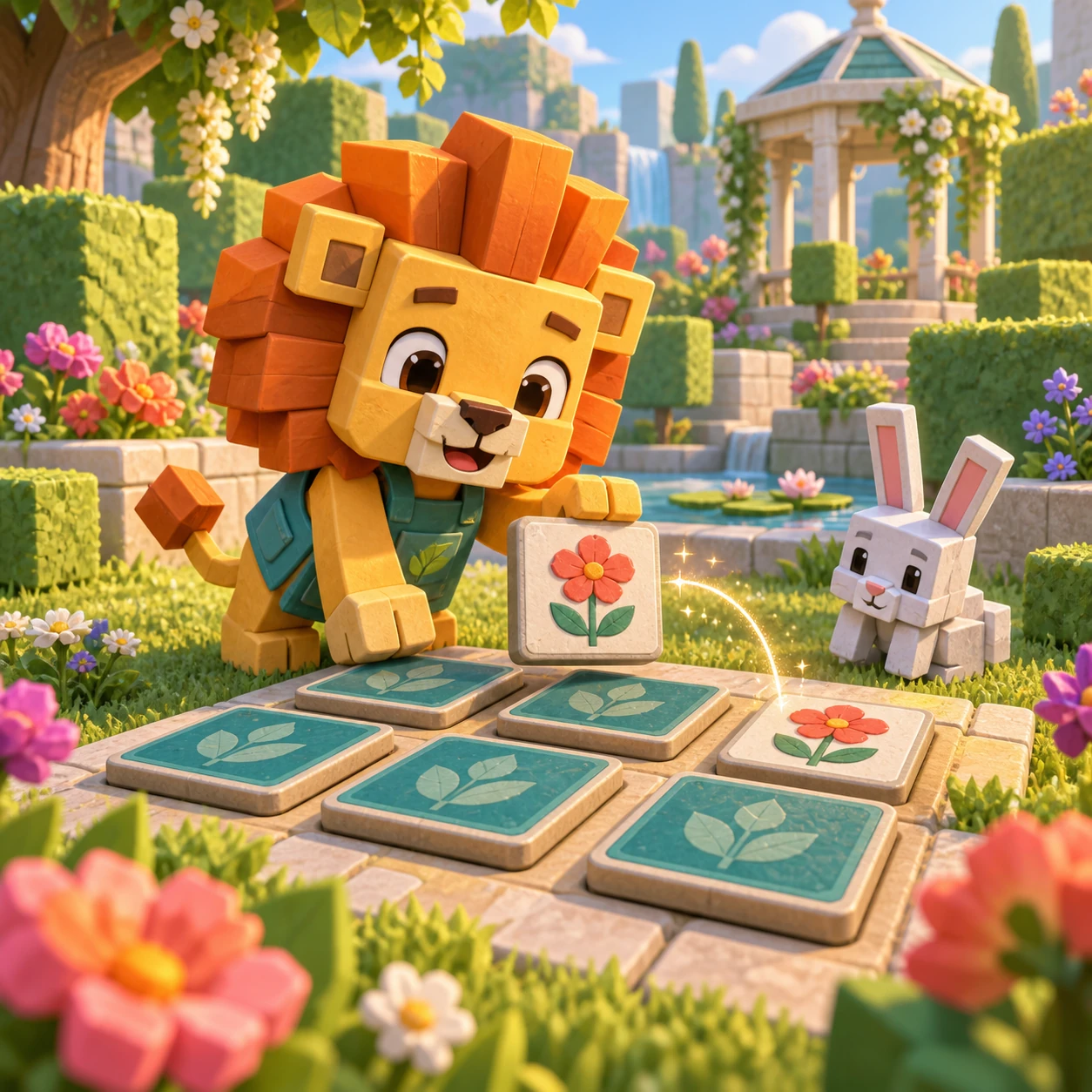
Animal Star Memory is a 30-stage picture-matching journey through the night sky. Players help six friendly Star Keepers reconnect animal constellations by finding matching cards. Every card stays in the same position for the whole stage, while opening previews, larger boards, move limits, and required animal order increase the challenge. Every fifth stage is a Keeper Check, and Stage 30 combines a full twelve-pair preview with ordered recall.
The Animal Star Map once helped forest, river, meadow, and polar animals find their way home after sunset. A gentle meteor shower did not destroy the map, but separated every animal light into two hidden cards. The player becomes the Keepers' young map reader, reconnecting each pair so its constellation can shine again.
Cat, Bear, Owl, Lion, Penguin, and Koala each guard one five-stage lesson. Passing a Keeper Check repairs that part of the sky. Completing the final Koala Grand Star Check means all twelve animal constellations have returned to their proper routes.
Stable positions: every animal remains on its original card for the entire stage, including after a preview, mismatch, or successful match.
Preview stages reveal the complete board briefly, then hide every card before input begins.
Ordered stages name the animal pair that must be cleared next. A correct pair found out of order is shown, then hidden without advancing.
Larger boards and tighter move limits deepen the challenge without erasing information the player already learned.
Moves, pairs, best streak, score, stars, stage unlocks, and best scores provide local progress feedback. No leaderboard is used.
Stages 1-5 teach classic position matching and end with Cat's opening-preview check. Stages 6-10 shorten the preview while boards grow.
Stages 11-15 strengthen stable recall on six-to-ten-pair boards. Stages 16-20 require the shown animal order.
Stages 21-25 expand to twelve stable pairs. Stages 26-30 combine previews and ordered recall, culminating in a full twelve-pair finale.
The game begins with a familiar matching rule so the controls are immediately readable. Its depth comes from larger stable boards, shorter opening previews, move limits, and ordered targets. Learned positions always remain reliable, so difficulty rewards attention instead of forcing blind guesses. The same large picture cards work on touch screens and keyboards without extra control complexity. Friendly Keeper Checks replace combat because the story is about repairing a shared star map. Retries remain immediate and supportive.
Animal Star Memory may support visual recall, attention, and following a short sequence. Adults can ask which two positions belong together or why an ordered pair should be found first. The game has no combat, account requirement, public ranking, or advertising request on this Kids page. Stars and the Skill Report are encouraging local game feedback, not an intelligence, school, health, or developmental assessment.