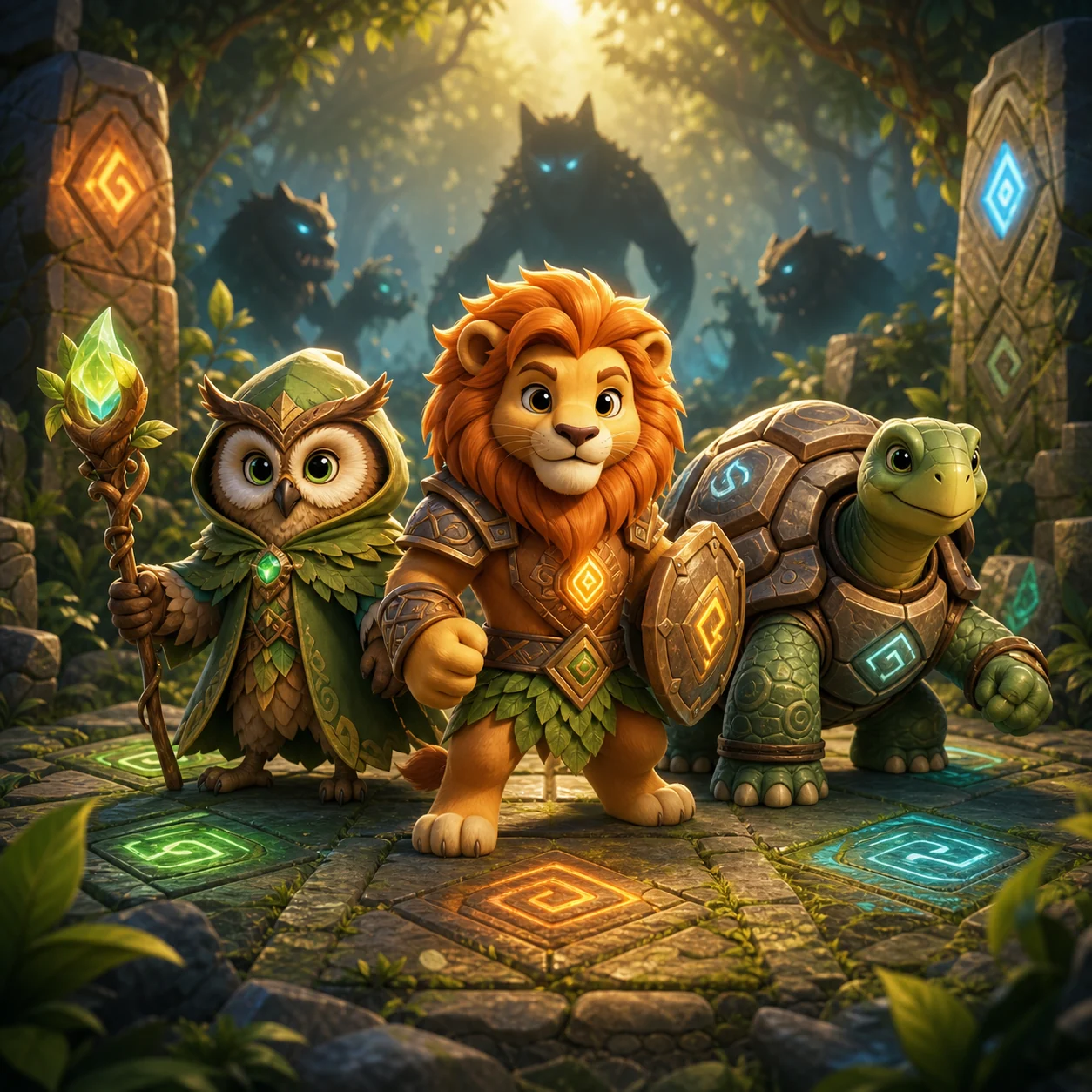
The tempting move is usually “attack.” In Animal Rune Tactics, that is often the move that gets a hero into trouble.
Each turn gives the Lion, Owl, and Turtle one action. They can move, attack, Guard, or spend Energy on a Skill. That sounds generous until an enemy is about to counter, a lane is blocked, or a hero needs to be in exactly the right cell next turn.
Position is a resource
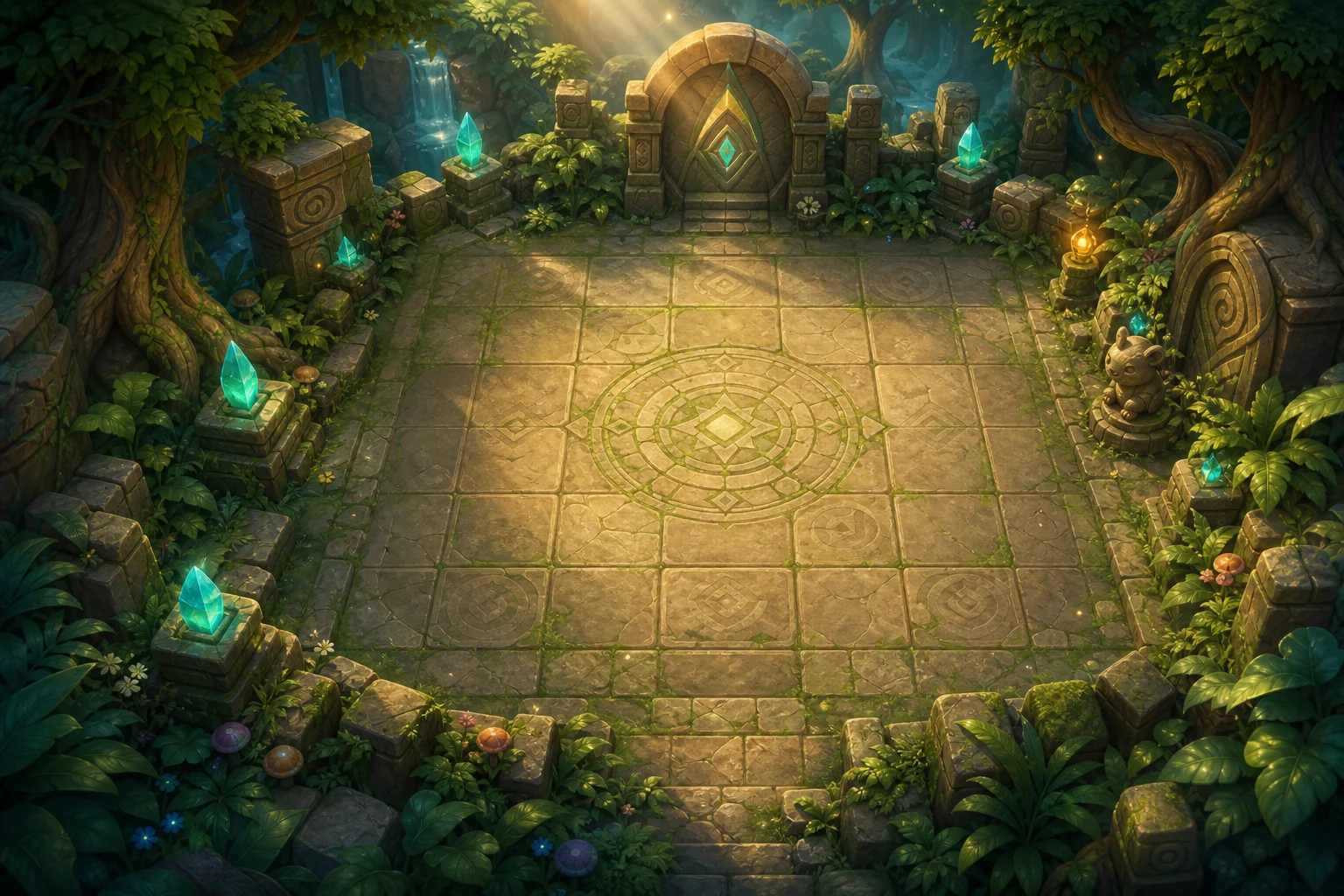
The board stays three cells wide and four cells tall, so the whole decision remains visible on a phone. The small space makes every move matter. Walking toward an enemy may mean giving up an attack. Guarding may be stronger than chasing a little more damage. Moving the Turtle away from the front can make the next enemy turn much worse.
That is the part I enjoy most: the game does not ask only “who can I hit?” It asks “where do I want the fight to happen?”
Saving a Skill can be the smart play
Rune Skills are powerful, but Energy is limited. Spending a Skill now can solve the current turn and create a problem on the next one. Holding it back can feel passive, yet it may be the choice that keeps a hero alive through the enemy phase.
We wanted the player to feel that tension without making the game depend on fast reactions. Nothing moves while a decision is open. You can read the board, check the enemy traits, and take a breath.
Failure should leave a useful clue
A failed mission is only valuable if the next attempt has a clear direction. The result screen gives a retry suggestion, such as guarding before the enemy turn, keeping Turtle near the front, or focusing one beast until it falls.
That does not remove the challenge. It gives the challenge a handle. The player still has to execute the plan, notice what changed, and decide whether the problem was position, target order, or timing.
Why the reward matters
After a victory, the Rune Reward asks another small question. Do I want more attack, more health, extra experience, starting Energy, or a future revive?
None of these choices is automatically correct. The best reward depends on what the next mission is likely to ask of the squad. That is how a single battle connects to the larger campaign: not through a bigger number alone, but through a reason to remember what went wrong.
If you are making a turn-based game, try asking three questions: Does every turn offer a real trade-off? Can the player understand why a move failed? Does the next attempt feel meaningfully different?
Animal Rune Tactics is built around those questions. Sometimes the best move is an attack. Sometimes it is one careful step sideways. 🐢
Play Animal Rune Tactics now →
This article was outlined with AI assistance and then checked and edited against the actual WeightPlay project by the WeightStudio team.