Pong
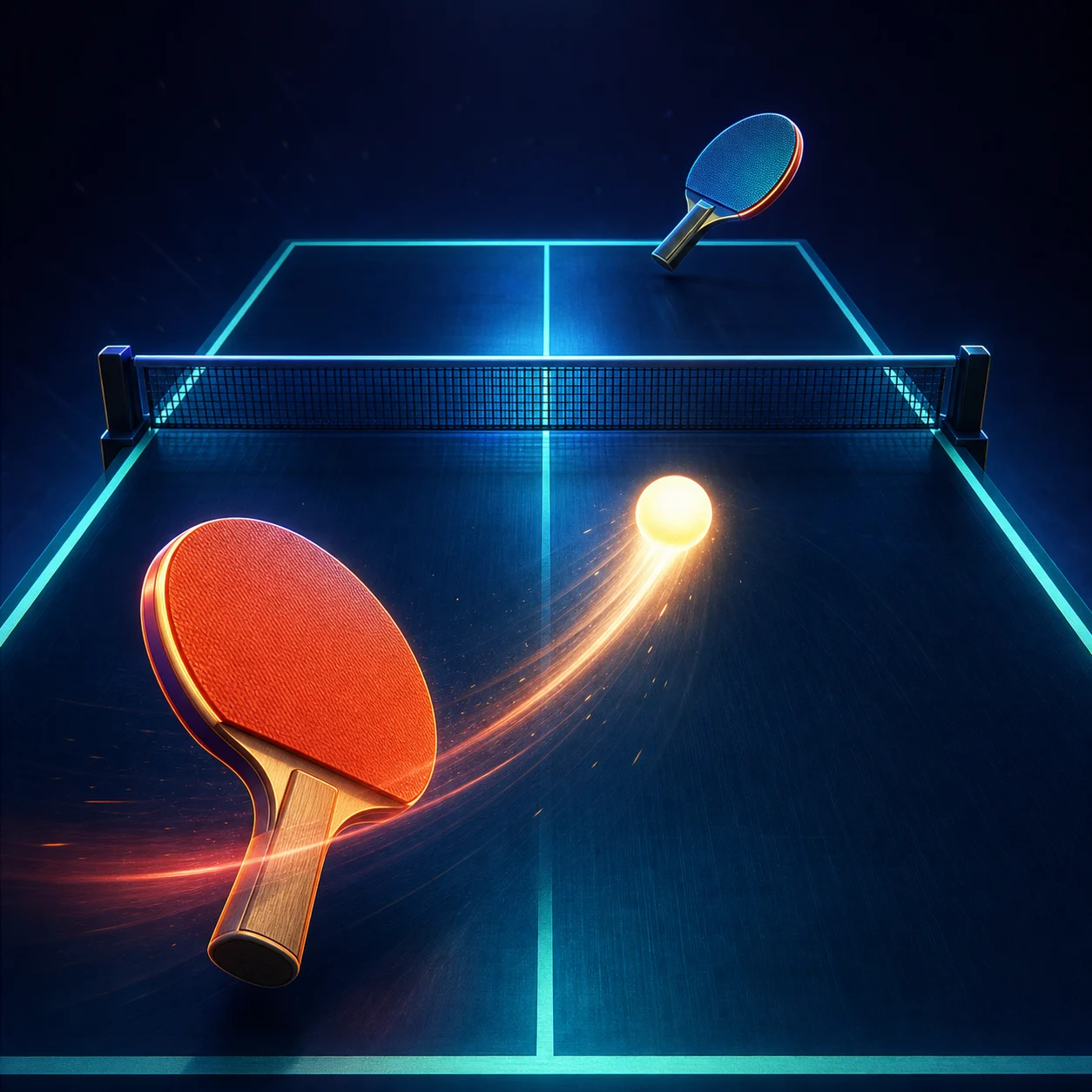
Move your paddle, return the ball, and beat the computer to 7 points.
WeightPlay Original Game Guide
Pong
GameplayReal-time paddle rally
GenreClassic · Arcade · Action
DifficultyPractice / Club / Expert
How the Systems Work
Paddle contacts keep the rally going, but only a ball passing an end line scores. Returns increase ball speed up to a cap.
How to Play
- Drag across the court, move your mouse, or hold ← / → (A / D). Return the moving ball; missing your end gives your opponent one point. First to 7 wins.
- The centre of your paddle returns straight shots. Hit near the edges to angle the ball past the opponent. Space serves or pauses.
Match Difficulty and Rhythm
Unlike a grid-toggle puzzle or a turn-based board game, Pong keeps the ball moving while you reposition your paddle. Practice, Club, and Expert change the computer opponent's match difficulty, not a sequence of stages.
Player and Save Information
Wins are counted separately by match difficulty. Your selected difficulty and sound preference stay in this browser. No account, purchase, or online match is required.
FAQ
- Does a side-wall bounce score?
- No. The side walls keep the ball in play; a point is scored only when it passes an end line.
- How can I anticipate a side-wall rebound?
- The side walls reflect the ball without awarding a point. Follow its direction after the rebound and move toward where it will cross your paddle, not just its current horizontal position. A central return is easier to read; an edge return changes the angle, but does not guarantee a point.
- What does the rally count?
- It counts paddle contacts on both sides. A point comes only when the ball passes an end line; each return adds speed up to the cap.