
WeightPlay
Animal Guard Yard
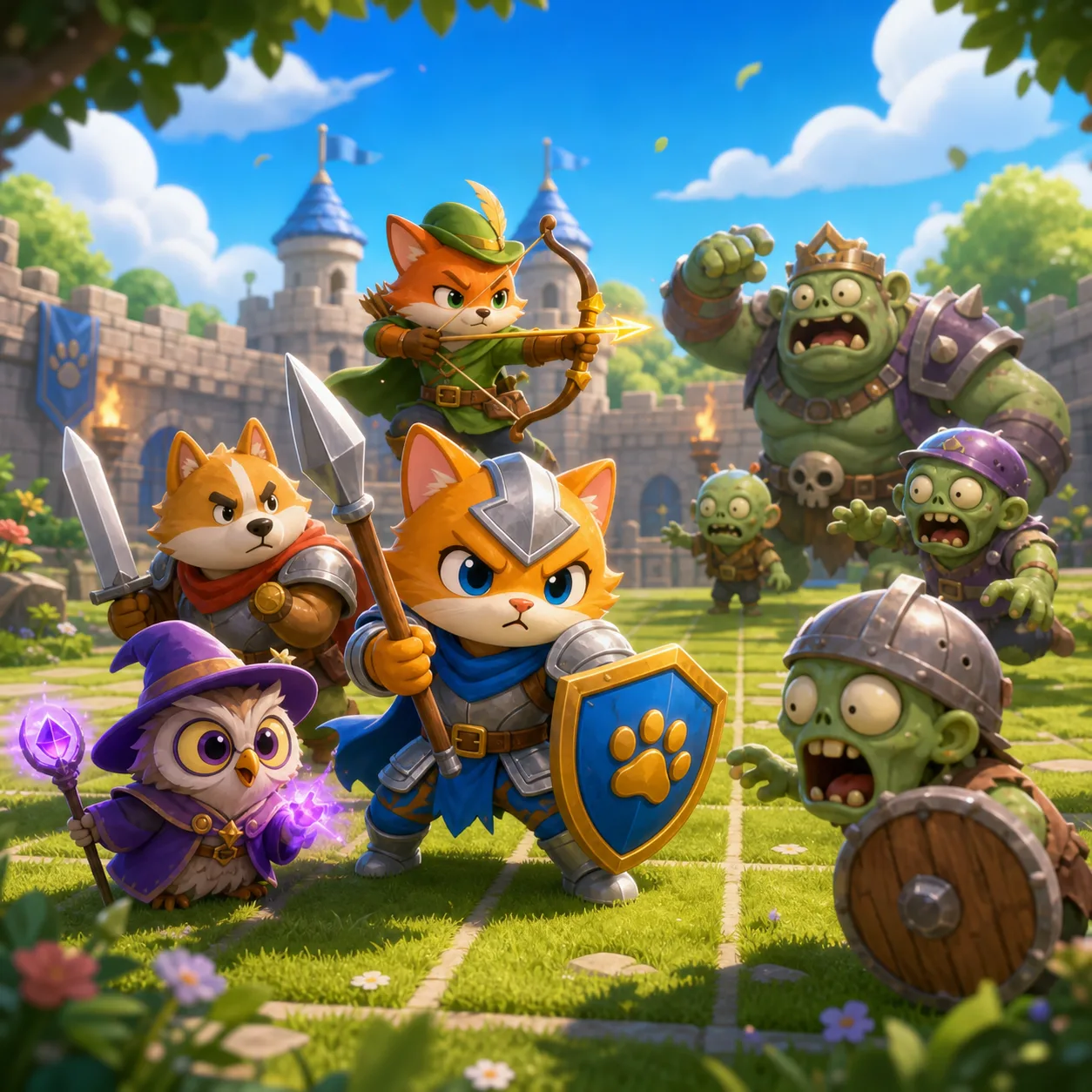
Animal Guard YardPlace animal guards and stop the wild beasts.
 0
0 0
0 3
3
Loading
0%
WeightPlay
Beyond the vegetable beds of Clover Yard lies a chain of six garden regions that once shared sunlight, seeds, and water. A confused parade of wild beasts has begun crossing those paths at the busiest time of the season. The animals are not villains: healers are trying to keep their herd moving, burrowers follow underground roots, and sun thieves collect any bright energy they find. If too many reach the cottage gate, the young plants will be trampled. The player becomes the yard keeper and organizes four trained animal guards to hold five lanes without hurting the garden itself.
Each fifth stage is guarded by a larger animal with its own reason for blocking the route. Moss Horn Rhino tests whether the first defense has two layers. Prism Shell Tortoise protects a crystal watering pool and closes its shell under pressure. Burrow Badger Chief changes lanes through old tunnels, Ember Mane Boar announces a powerful rush, and Gale Wing Eagle delays guard attacks with sweeping gusts. At the Moon Crown Garden, the final elk combines broad lane pressure with a restoring moon pulse. Clearing all 30 stages means the paths are safe again and the six guardians agree to share the garden rather than charge through it.
Cat is the dependable ranged guard, and every fourth seed can pierce a second target. Dog has the health to block a lane at close range and briefly slows with each bite. Owl fires quickly and applies a lighter slow, which creates time against rushers. Fox costs shared diamonds to unlock, but its second shot can support a neighboring lane. These roles matter more than filling every tile: a Dog and Cat pair can hold one lane, while Owl and Fox help when pressure moves between lanes.
Success is not measured only by survival. Stage cards retain the best score and show cleared and Perfect states. Five, fifteen, and thirty Garden Medals grant one-time coin rewards, so replaying an early stage with a cleaner layout still advances training. Coins improve guard health, damage, and attack timing locally in this browser. Diamonds are only used for the optional Fox unlock; every stage can be completed with the three starting guards.
Stages 1-5 teach lane reading, fast enemies, blocking, and two-layer defense before Moss Horn Rhino. Stages 6-10 introduce healers and ask the player to save burst damage for Prism Shell Tortoise's open window. Stages 11-15 add burrowers that visibly change lanes, ending with a Badger Chief that makes the middle three lanes important. Stages 16-20 place sun thieves beside faster escorts and finish with Ember Mane Boar's announced rush. Stages 21-25 mix shields, speed, and moving pressure before Gale Wing Eagle delays nearby attack timing. The last five stages combine all three special enemies, then Moon Crown Elk tests whether the player can maintain several complete lanes instead of one overloaded row.
Animal Guard Yard uses a fixed five-by-nine field because a lane must remain readable on a phone without shrinking animals into tiny icons. Placement is tap-based rather than drag-based so collecting sun and reacting to warnings remain comfortable with one hand. Automatic attacks keep attention on planning, timing, and resource choices instead of repeated tapping. The campaign grows through new rules at five-stage intervals rather than only increasing health. Every special action has a visible cue and a direct response, and each Boss has separate artwork so players can recognize a new challenge before reading its name. This makes the game one of WeightPlay's longer strategy campaigns, distinct from the site's short matching and reaction games.